Guides
Preamplifier, power amplifier, integrated amplifier or receiver?
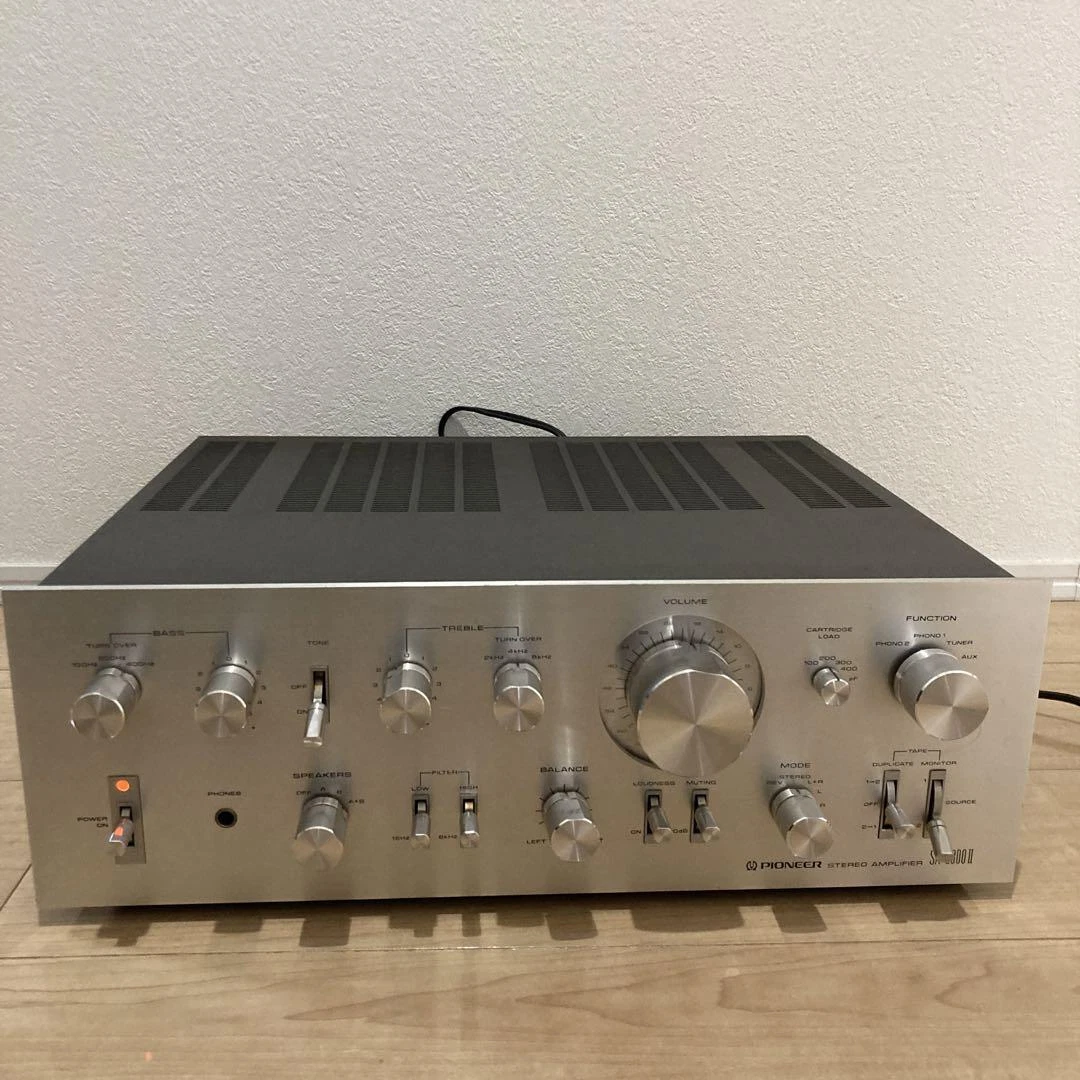
A preamplifier handles source selection and volume. A power amplifier delivers the power for the loudspeakers. An integrated amplifier does both in one cabinet. A receiver is an integrated amplifier with a built-in tuner.
Redactie Vintage Pioneer Club ·
The four types side by side
| Type | What it does | What you need with it | Pioneer example |
|---|---|---|---|
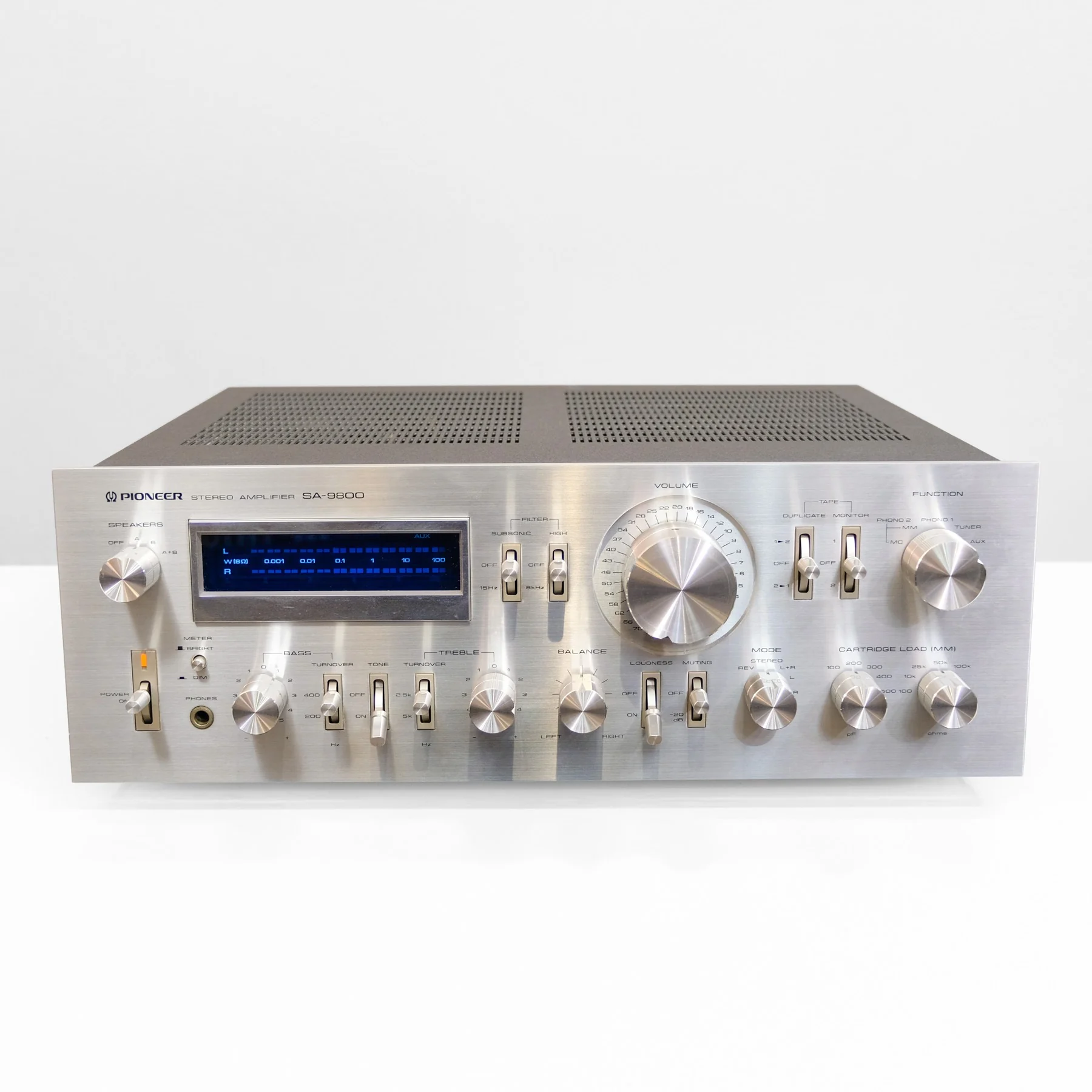
| Integrated amplifier | What it doesPre and power amplification in one unit | What you need with itSources and loudspeakers | Pioneer exampleSA-8800, SA-9800 |
| Receiver | What it doesTuner and amplification in one unit | What you need with itLoudspeakers and any extra sources | Pioneer exampleSX receivers |
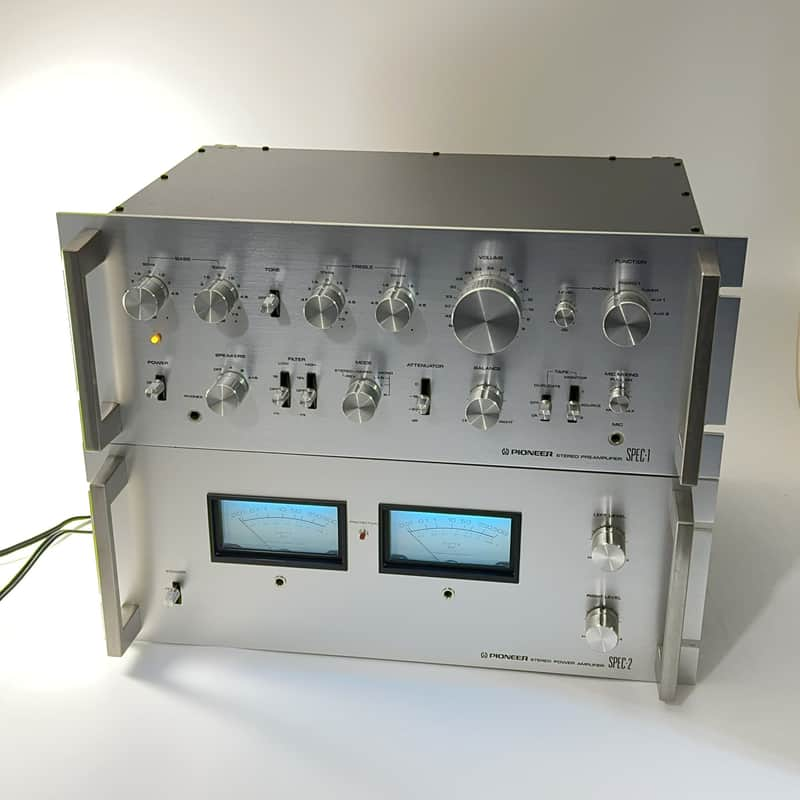
| Preamplifier | What it doesSource selection, volume and signal processing | What you need with itA power amplifier | Pioneer exampleSPEC-1, C-21 |
| Power amplifier | What it doesDelivers the power for passive loudspeakers | What you need with itA preamplifier | Pioneer exampleSPEC-2, M-22 |
Why separates?
With a separate pre and power amplifier, the work is split across two units. At Pioneer, that was the idea behind the SPEC family and Series Twenty. It takes more space and more attention to connections, signal level and cabling. It is a different choice, not automatically a better one.
What to look out for
An input labelled TUNER does not mean there is a tuner inside. An integrated amplifier has no radio; for that you connect a separate tuner, such as a TX-9800.
If you play records, check that the unit has a phono input that suits your cartridge. Whether MM and MC are supported differs per model.
An equaliser or an active crossover is not an amplifier. A unit that looks like a match is not necessarily functionally interchangeable.
Frequently asked questions about amplifier types
What is the difference between a receiver and an integrated amplifier?
A receiver has a built-in tuner, so it can receive radio by itself. An integrated amplifier does not; you connect a separate tuner to it. An input labelled TUNER only means you can connect a tuner there.
Can I connect loudspeakers to a preamplifier?
Not passive loudspeakers. A preamplifier handles source selection and volume, but does not deliver the power loudspeakers need. That takes a power amplifier. A Pioneer SPEC-1, for example, is paired with a SPEC-2 or SPEC-4.
Are separates better than an integrated amplifier?
Not automatically. It is a different approach, which takes more space and more attention to connections. Design, connections, the condition of the unit and your own preference all play a part.
Can I connect a turntable to any amplifier?
Only if the amplifier has a phono input that suits your cartridge. Whether MM and MC are supported differs per model. Check this for the exact unit.
Is an equaliser or crossover an amplifier too?
No. An equaliser, such as the Pioneer SG-9800, adjusts the frequency response. An active crossover, such as the D-23, divides the signal across several amplifiers. Neither drives loudspeakers by itself.